
Elastic bandages buyer's guide: compression, widths, weave and postpartum
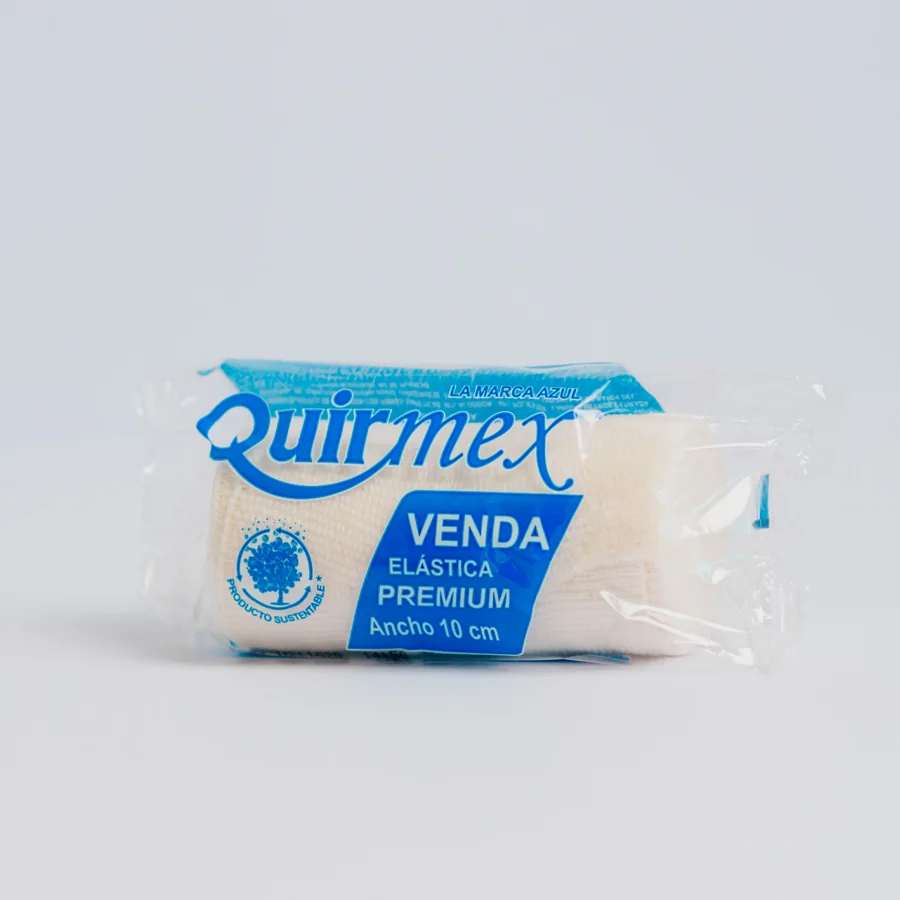
Elastic bandages are a steady, high-rotation line — but "elastic bandage" covers a range of compression, construction and widths. Here is how to choose and specify them for a distribution programme.
Compression and recovery
The value of an elastic bandage is even compression that holds and then recovers its shape. Woven cotton-blend elastic bandages give light-to-medium compression suitable for sprains, support and post-operative use. For graduated medical compression (e.g. venous therapy) you need a different, certified compression class — don't confuse the two.
Choosing widths
- 5–7.5 cm — fingers, wrists and small joints.
- 10–15 cm — ankles, knees, elbows (the highest-volume widths).
- 20–30 cm — thighs and torso.
A complete distribution range carries the full ladder; Quirmex makes 5, 7.5, 10, 15, 20, 25 and 30 cm, each 5 m stretched.
Woven vs crepe
Woven elastic bandages are durable and reusable; crepe bandages are lighter and cheaper but lose elasticity faster. State which construction you want — it changes both performance and price point.
Closures and packaging
Specify closure (clips vs integrated hook fastener), individual wrap vs bulk, and printed sleeves for private label. For retail, the sleeve is your shelf presence.
Postpartum and specialty
A wide (30 cm) postpartum abdominal bandage is a distinct, in-demand reference for maternity ranges — worth stocking alongside the standard ladder.
Frequently asked questions
Are these medical-grade compression bandages?
They are support/elastic bandages for sprains, support and post-operative use. Graduated medical compression (venous) is a separate certified class — tell us if that's what you need.
Which widths sell best?
10 cm and 15 cm are typically the highest-volume widths; a full distribution range carries 5 cm through 30 cm.
Do you offer a postpartum bandage?
Yes — a 30 cm abdominal postpartum bandage, 5 m stretched, ideal for maternity ranges.
Further reading
- How to import wound care and gauze from Mexico: HS codes, COFEPRIS, FDA & CE
- Absorbent cotton grades explained: USP absorbency, pleated vs rolled, and what to specify
- Sterile vs non-sterile gauze, tissue types and X-ray detectable: how to choose
- Private label wound care in Mexico: MOQs, lead times and the USMCA advantage
- Why source wound care from Mexico in 2026: USMCA tariffs, ISO 13485 and nearshoring
Building a bandage range?
Send the widths and volumes you need — we quote the full ladder with documentation.